1. Refugees
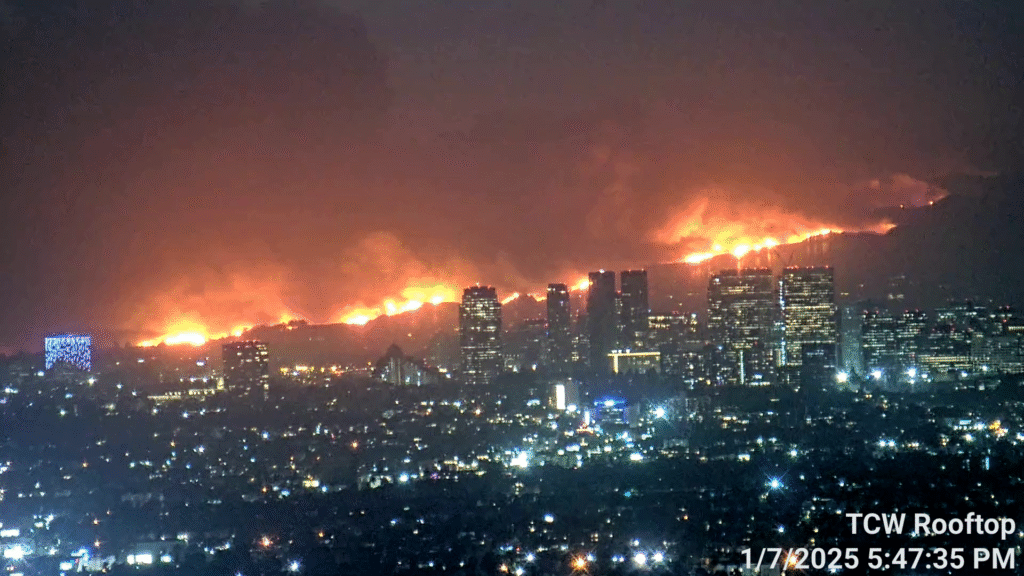
On Tuesday, January 7, 2025, I was on the phone with a friend who asked if I could see the fires from where I was. “What fires?” I asked, completely unaware. It didn’t take long to find out.
By that evening, friends from Pasadena showed up at my door with their pets and boxes of valuables, having just received an evacuation order. “We feel like refugees,” they said. We spent the night anxiously watching the news, hoping the flames wouldn’t reach their street.
I came to Los Angeles with my college roommate for a weekend after graduation, and never left. I’ve lived through myriad earthquakes, including the big Northridge Quake of 1994, as well as the terifying 1992 Rodney King race riots. I was a young mother and wondered about the wisdom of bringing these children into such a world. Earthquakes, fires, floods are common here, especially fires. Angelenos don’t scare easily.
2. Seasons
Here’s how it usually goes. We have a hot, dry summer, followed by fire season with the advent of the fall Santa Anas. Some rain falls in November or December, leading to mudslides in areas where the fires have depleted the vegetation holding the earth in place. Everything grows back in the spring, the cycle repeats.
This year is different. We haven’t had rain since last May: eights months of hot summer. Fire season now extends to January. Indeed, there is now no season — why can’t fires go year-round? There’s plenty of tinder throughout the enormous semi-arrid sprawl we call Greater Los Angeles. All it takes is the spark from a power line, carried on the wind, and poof another inferno.
Reminds me of the line from Hannah and Her Sisters, where one of the characters muses about the Holocaust, that we shouldn’t ask why it happened, but rather, given who we are, why it doesn’t happen more often. That’s how I feel about the fires. Really, what’s stopping them?
3. The Santa Anas
The Santa Anas winds are the villain of these fires. Sure the drought had turned the city to tinder, but the winds carried the embers and spread the fire far and wide.
The Santa Anas hold a place in Angeleno mythology. Raymond Chandler famously wrote:
“On nights like that, every booze party ends in a fight. Meek little wives feel the edge of the carving knife and study their husbands’ necks. Anything can happen.”
And Joan Didion, in an essay called “Los Angeles Notebook,” said:
“I have neither heard nor read that a Santa Ana is due, but I know it, and almost everyone I have seen today knows it too. We know it because we feel it. The baby frets. The maid sulks. I rekindle a waning argument with the telephone company, then cut my losses and lie down, given over to whatever is in the air.”
These sentiments are certainly poetic, but they’re ridiculous. The winds do not drive people to homicide or maids to sulk. The Santa Anas happen in the background, nobody comments on them, people don’t lie down due to “whatever is in the air.”
The winds are part of a weather pattern and they are associated with fire, not because of a metaphysical essence, but because, obviously, the fast-moving drafts carry sparks that spread the blaze.
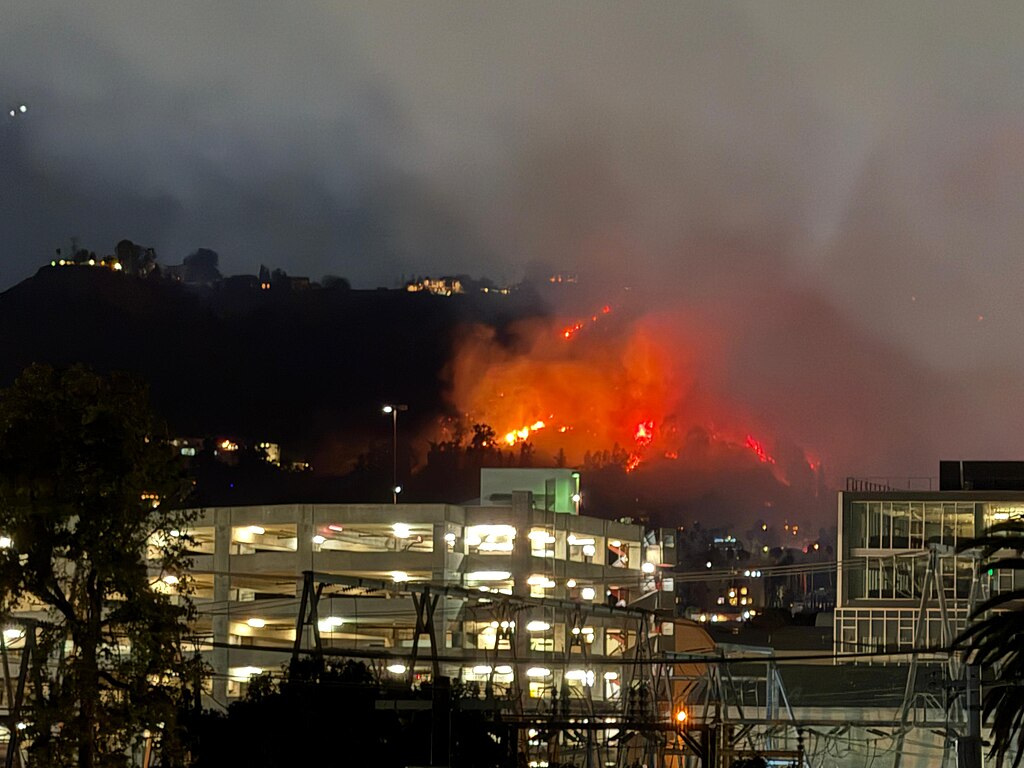
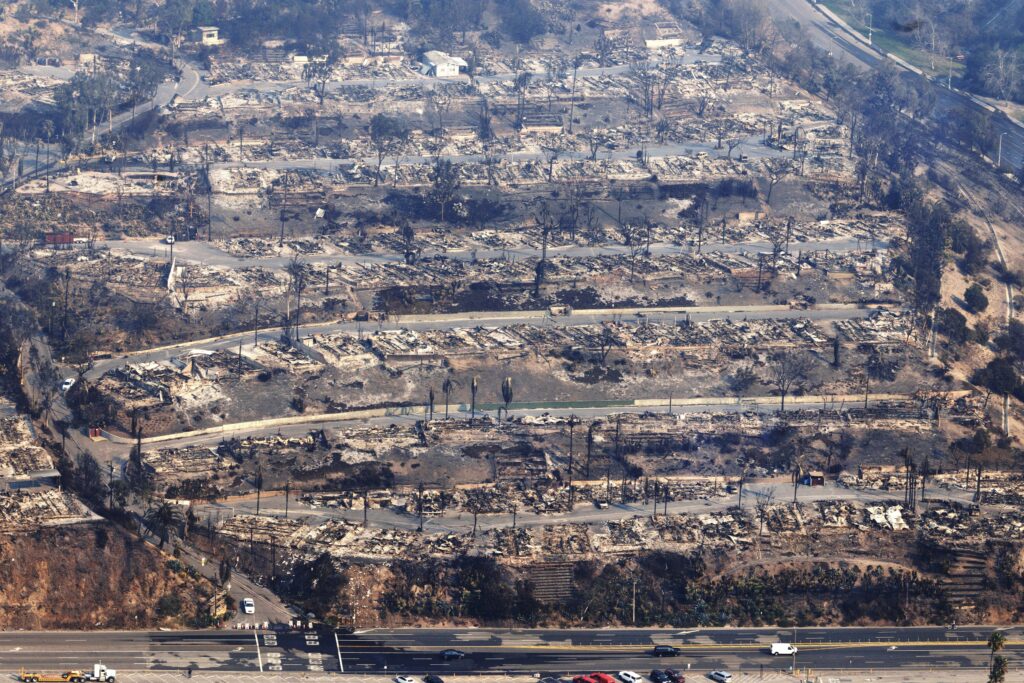
The Palisades Fire ended up burning 23,448 acres. To compare, Manhattan is 14,600 acres. The Eaton Fire burned 14,021 — a Manhattan. The Sunset Fire was a baby, only 43 acres, but very scary because it burned just above Hollywood, encroaching on Griffith Park and the Bowl. They put that one out fast.
It’s over for now. But that’s just it: For now.